

News
News
News & Events
2026-10-06
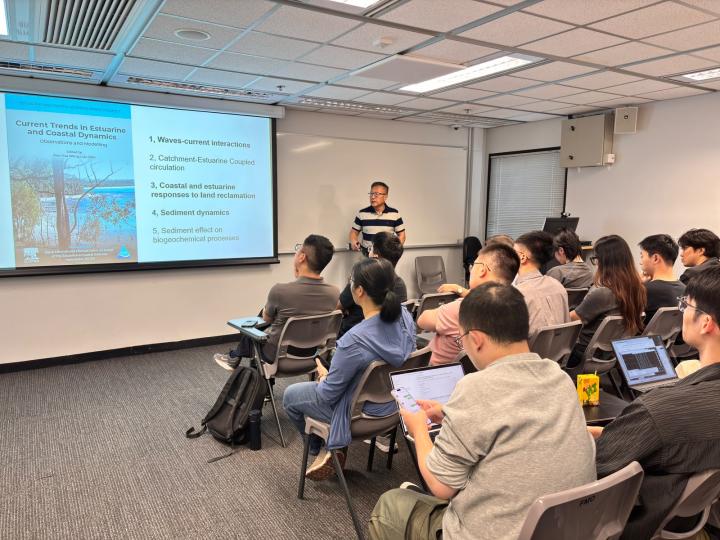
On October 6, 2026, Earth-HK hosted a seminar titled “Current Trends in Estuarine and Coastal Dynamics: Observations and Modelling” at HKUST, delivered by Prof. Xiao Hua Wang, Co-leader of the Sino-Australian Research Consortium for Coastal Management at the University of New South Wales, Canberra, Australia.
Read more
2026-09-11
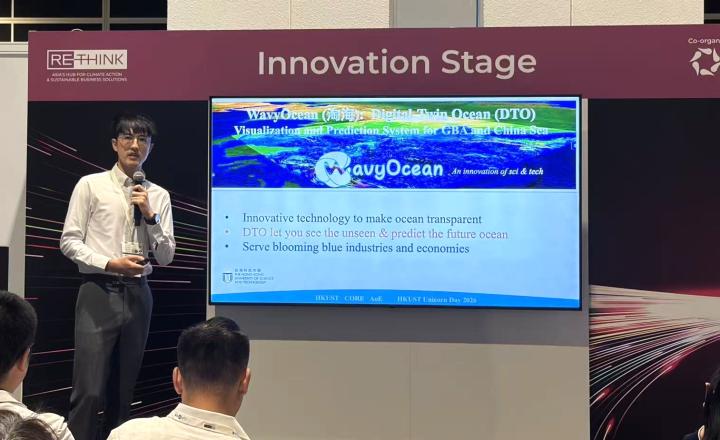
On September 10-11, Project Coordinator of Earth-HK, Prof. Jianping Gan’s team, showcased the latest generation of its digital-twin system---WavyOcean 3.0, at ReThink HK 2026--- Hong Kong's flagship conference. Held at the Hong Kong Convention and Exhibition Centre, the event brought together over 500 speakers across 138 sessions, providing a dynamic forum for business leaders, policymakers, and sustainability practitioners to explore pathways toward a resilient, low-carbon future.
Read more
2026-08-08
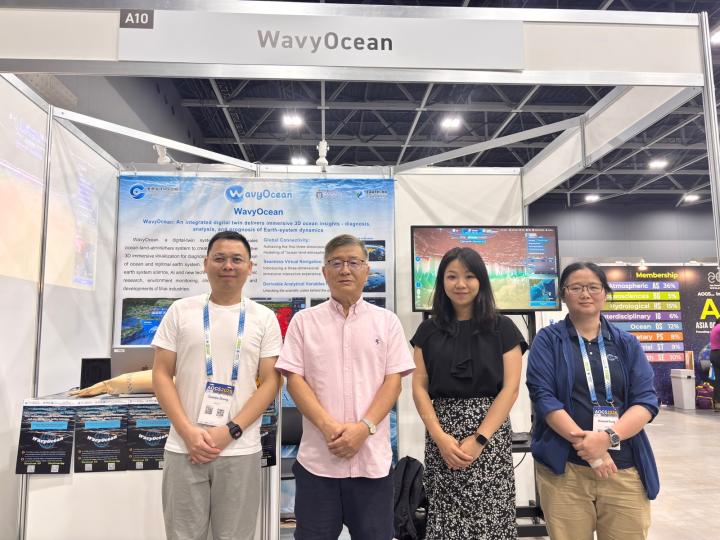
From August 2 to 7, 2026, Prof. Gan’s research team participated in the 23rd Annual Meeting of the Asia Oceania Geosciences Society (AOGS2026), held at the Fukuoka International Congress Centre in Fukuoka, Japan. During this prestigious international event, the team presented its innovative regional earth system digital twin, WavyOcean 3.0, to stakeholders and visitors in the Exhibition Hall.
Read more
2026-07-30
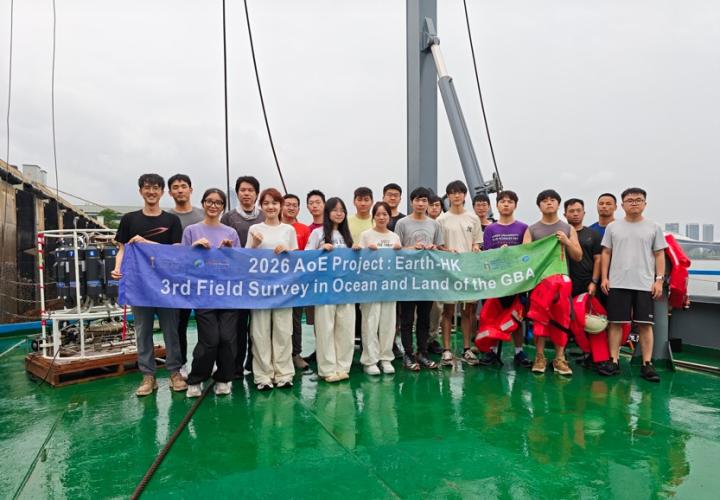
From July 14 to 24, 2026, Earth-HK research teams, with major members from CORE, conducted an 11-day scientific expedition along the coast of the Greater Bay Area. This significant endeavor brought together 20 faculty members and students from The Hong Kong University of Science and Technology, The Hong Kong University of Science and Technology (Guangzhou), Xiamen University, University of Macau, and The University of Hong Kong.
Read more
2026-07-07
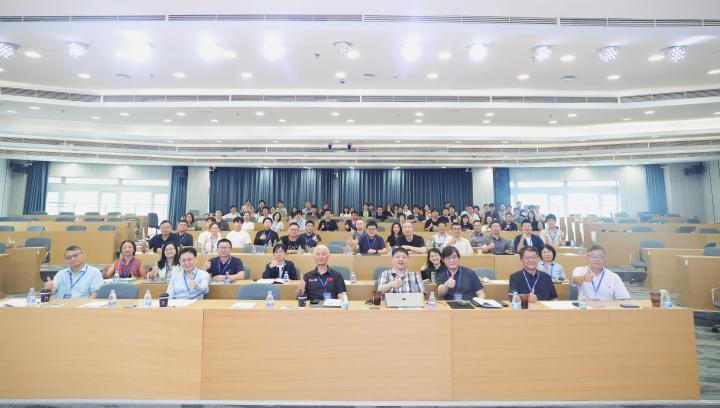
The Earth-HK Annual Workshop 2026 was successfully held on July 5-6, 2026 at Southern University of Science and Technology (SUSTech).
Read more
2026-06-02
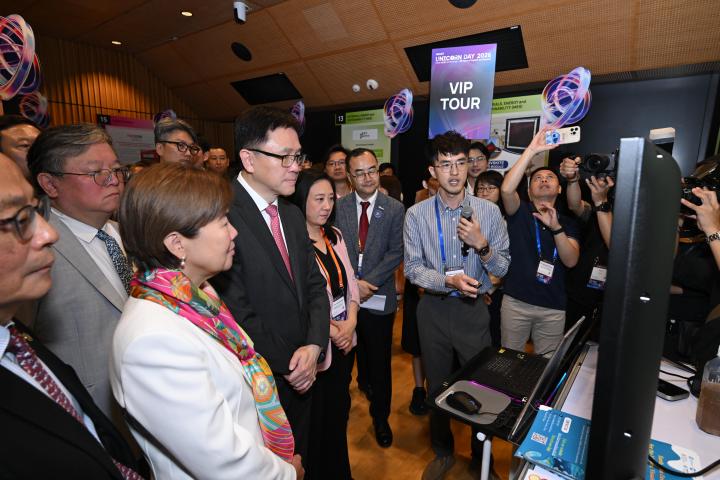
On 2 June 2026, Prof. Jianping Gan’s research team joined HKUST Unicorn Day 2026 at the Shaw Auditorium, showcasing WavyOcean v3.0, a Gold Medal winner at the 51st International Exhibition of Inventions of Geneva. The upgraded platform enhances real-time 3D rendering and immersive visualization for ocean and Earth systems. The team also participated in the “Future Unicorns: Deeptech Investment Pitch” session, highlighting its potential applications in the blue economy and environmental governance. Their participation reflects a strong commitment to advancing marine science and translating research into impactful innovation.
Read more
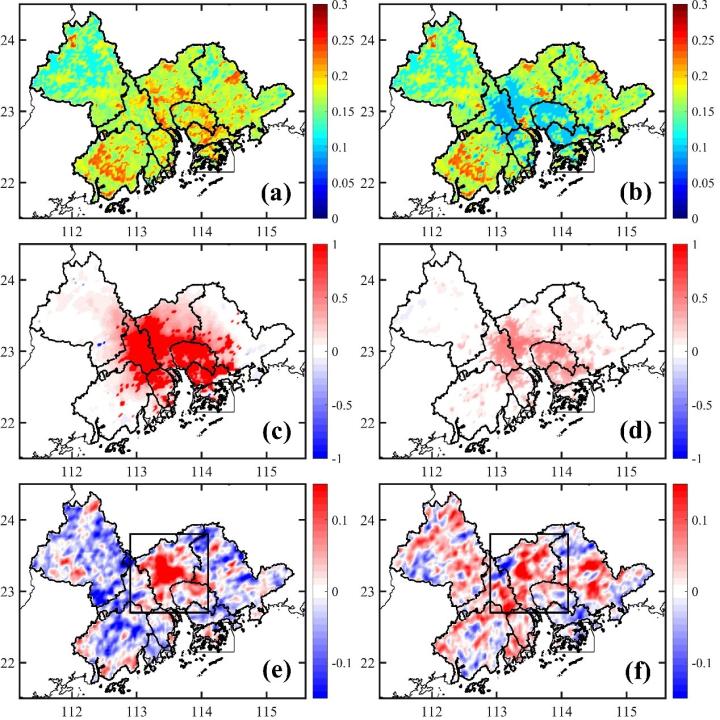
2026-03-20
Rapid urban development and anthropogenic heat emissions are making summers both hotter and wetter across China’s Guangdong–Hong Kong–Macao Greater Bay Area (GBA), according to a new study led by researchers from the Center for Ocean Research in Hong Kong and Macau(CORE), together with a team led by Professor Jianping Gan at the Hong Kong University of Science and Technology(HKUST).
Read more